カテゴリーアーカイブ クロスフロー熱交換器

クロスフロー熱交換器はどのように機能するのか

crossflow heat exchanger works by allowing two fluids to flow at right angles (perpendicular) to each other, typically with one fluid flowing through tubes and the other flowing across the outside of the tubes. The key principle is that heat is transferred from one fluid to the other through the walls of the tubes. Here's a step-by-step breakdown of how it works:

Components:

  1. Tube Side: One of the fluids flows through the tubes.
  2. Shell Side: The other fluid flows over the tubes, across the tube bundle, in a direction perpendicular to the flow of the fluid inside the tubes.

Working Process:

  1. Fluid Inlet: Both fluids (hot and cold) enter the heat exchanger at different inlets. One fluid (let's say the hot fluid) enters through the tubes, and the other fluid (cold fluid) enters the space outside the tubes.
  2. Fluid Flow:

    • The fluid flowing inside the tubes moves in a straight or slightly twisted path.
    • The fluid flowing outside the tubes crosses over them in a perpendicular direction. The path of this fluid can be either crossflow (directly across the tubes) or have a more complex configuration, like a combination of crossflow and counterflow.

  3. 熱伝達:

    • Heat from the hot fluid is transferred to the tube walls and then to the cold fluid flowing across the tubes.
    • The efficiency of heat transfer depends on the temperature difference between the two fluids. The larger the temperature difference, the more efficient the heat transfer.

  4. Outlet: After heat transfer, the now cooler hot fluid exits through one outlet, and the now warmer cold fluid exits through another outlet. The heat exchange process results in a temperature change in both fluids as they flow through the heat exchanger.

Design Variations:

  • Single-pass crossflow: One fluid flows in a single direction across the tubes, and the other fluid moves through the tubes.
  • Multi-pass crossflow: The fluid inside the tubes can flow in multiple passes to increase the contact time with the fluid outside, improving heat transfer.

Efficiency Considerations:

  • Crossflow heat exchangers are generally less efficient than counterflow heat exchangers because the temperature gradient between the two fluids decreases along the length of the heat exchanger. In counterflow, the fluids maintain a more consistent temperature difference, which makes it more effective for heat transfer.
  • However, crossflow heat exchangers are easier to design and are often used in situations where space is limited or where fluids need to be separated (like in air-to-air heat exchangers).

Applications:

  • Air-cooled heat exchangers (like in HVAC systems or car radiators).
  • Cooling of electronic equipment.
  • Heat exchangers for ventilation systems.

So, while not as thermally efficient as counterflow heat exchangers, crossflow designs are versatile and commonly used when simplicity or space-saving is important.

クロスフロー熱交換器の温度プロファイル

以下は、 温度プロファイル のために クロスフロー熱交換器、具体的には 両方の液体は混ざっていない:


🔥 クロスフロー熱交換器 – 両方の流体が混ざらない

➤ フロー配置:

  • 1 つの流体が水平方向に流れます (たとえば、チューブ内の熱い流体)。
  • もう 1 つは垂直方向に流れます (つまり、冷たい空気がチューブを横切ります)。
  • 流体内または流体間での混合はありません。


📈 温度プロファイルの説明:

▪ 熱い液体:

  • 入口温度: 高い。
  • 流れていくと、 熱を失う 冷たい液体に。
  • 出口温度: 入口より低いですが、接触時間が異なるため、交換器全体で均一ではありません。

▪ 冷たい液体:

  • 入口温度: 低い。
  • 熱いチューブを流れるときに熱を獲得します。
  • 出口温度: 高くなりますが、交換機によって異なります。

🌀 クロスフローと混合がないため:

  • 交換機の各ポイントは、 異なる温度勾配各流体が表面と接触していた時間に応じて異なります。
  • 温度分布は 非線形 向流式または並流式の熱交換器よりも複雑です。


📊 典型的な温度プロファイル(概略レイアウト):

                ↑冷たい液体が

ハイ │ ┌──────────────┐
温度 │ │ │
│ │ │ → 熱い液体が入っています(右側)
│ │ │
↓ └──────────────┘
冷たい液体が出てくる ← 熱い液体が出てくる

⬇ 温度曲線:

  • 冷たい液体 徐々に温度が上昇します。曲線は低く始まり、上向きに弧を描きます。
  • 熱い液体 冷却します — 最初は高く始まり、下向きに弧を描きます。
  • 曲線は 平行ではない、 そして 対称ではない クロスフローの形状と熱交換率の変化によります。


🔍 効率性:

  • 効果は 熱容量比 そして NTU(転送単位数).
  • 一般的に 効率が低い 逆流よりも より効率的 平行流よりも。

両方の流体が混ざらないクロスフロー熱交換器

両方の流体が混ざらないクロスフロー熱交換器 refers to a type of heat exchanger where two fluids (hot and cold) flow perpendicular (at 90°) to each other, and neither fluid mixes internally or with the other. This configuration is common in applications like air-to-air heat recovery or automotive radiators.

Key Features:

  • Cross flow: The two fluids move at right angles to each other.
  • Unmixed fluids: Both the hot and cold fluids are confined to their respective flow passages by solid walls or fins, preventing any mixing.
  • Heat transfer: Occurs across the solid wall or surface separating the fluids.

Construction:

Typically includes:

Enclosed channels for the second fluid (e.g., water or refrigerant) to flow inside the tubes.

Tubes or finned surfaces where one fluid (e.g., air) flows across the tubes.

Common Applications:

  • Radiators in cars
  • Air-conditioning systems
  • Industrial HVAC systems
  • Heat recovery ventilators (HRVs)

Advantages:

  • No contamination between fluids
  • Simple maintenance and cleaning
  • Good for gases and fluids that must remain separate

中国製プレート式熱回収交換器

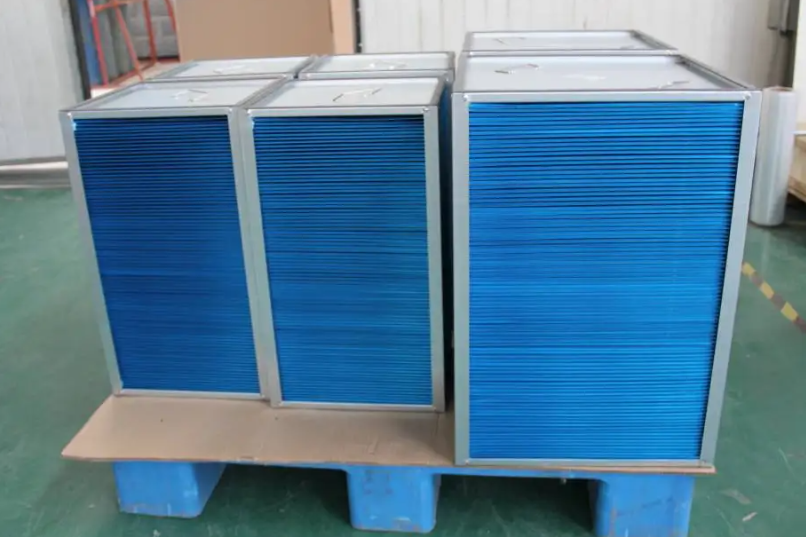
熱交換器は主にアルミ箔、ステンレス箔、ポリマーなどの材料で作られています。アルミ箔で遮断された気流と反対方向に流れる気流の間に温度差が生じると、熱伝達が発生し、エネルギー回収が実現します。空気対空気熱交換器を使用することで、排気中の熱を利用して新鮮な空気を予熱することができ、省エネを実現します。この熱交換器は独自の点面結合密閉プロセスを採用しており、長寿命、高い熱伝導性、透過性がなく、排気ガスの透過による二次汚染もありません。

Plate heat recovery exchanger

クロスフロープレート熱交換器

QQ20241015-153001.png

はじめに: 熱交換コアは、異なる温度の 2 つの空気流が正のクロスフローで流れ、チャネルが完全に分離された 2 つの流体間で熱交換が行われるクロスフロー熱交換コアです。

クロスフロープレート式熱交換器は、空調設備の熱回収部の主要部品として適用できます。また、換気システムにも適用でき、熱回収部の主要部品としてダクト内に設置され、設置位置を柔軟に切り替えることができます。

Cross flow plate heat exchangers

適用シナリオ:塗装機、ラミネート機などの廃熱回収ソリューション、野菜、ナッツ、エビ皮、干物などの乾燥の廃熱回収ソリューション、塗装焼成室の廃熱回収、ボイラーや工場電力などの排気ガスの廃熱回収の省エネ技術。

モジュール構造は、さまざまな気流とシーンのアプリケーションに合わせて、任意のサイズと積み重ね高さの組み合わせを提供できます。

材質:現場の作業条件に応じて、親水性アルミ箔、エポキシ樹脂アルミ箔、ステンレス鋼など、さまざまな材質を選択できます。

Cross flow plate heat exchangers

ヘルプが必要ですか?
ja日本語